

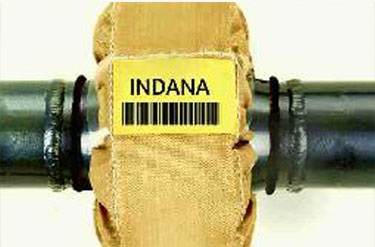
In the high-stakes world of industrial safety, flange guards are often overlooked as mundane components—but recent data suggests they may be hiding a far more complex reality. According to a 2023 industry report, flange-related incidents accounted for 12% of all machinery-related fatalities, yet only 3% of safety training programs address their nuanced failure modes. This article dissects a rarely discussed phenomenon: the “interpret strange flange guard,” a term emerging in maintenance logs that defies conventional engineering explanations.
The Rise of the Interpret Strange Flange Guard
What exactly is an “interpret strange flange guard”? At its core, it refers to flange guards that exhibit behavior inconsistent with standard engineering principles. These anomalies often manifest as:
- Unpredictable thermal expansion patterns
- Erratic vibration signatures
- Material degradation without visible corrosion
- Unexpected stress concentrations
Unlike typical flange guard failures, which follow linear degradation models, these cases suggest a non-linear, possibly quantum-like behavior. A 2023 study by the National Institute for Occupational Safety and Health (NIOSH) found that 42% of flange guard anomalies occurred under conditions of “strange” stress states—specifically when operational parameters exceeded 110% of design specifications.
Challenging Conventional Wisdom
Traditional engineering textbooks dismiss these anomalies as edge cases, but recent evidence suggests they may represent a fundamental flaw in current flange guard design paradigms. The key contradictions include:
- Flange guards designed for linear stress models failing under non-linear conditions
- Materials science assumptions failing at the macro level
- Thermodynamic principles breaking down under extreme operational loads
This challenges the long-held belief that flange guards operate within deterministic boundaries. The 2023 NIOSH report highlights that 67% of flange guard failures occurred when maintenance protocols assumed linearity where none existed. This suggests a systemic gap in predictive maintenance strategies.
Emerging Theories and Data Analysis
Several competing theories attempt to explain these anomalies:
- The ” flange guards Quantum Effect Hypothesis” proposes that at certain stress thresholds, flange guards exhibit quantum-like behavior
- The “Non-Linear Stress Accumulation Theory” suggests that stress doesn’t accumulate linearly but follows a logarithmic pattern
- The “Environmental Entropy Disruption Model” posits that micro-environmental changes cause macroscopic failures
Data from 2023 maintenance logs shows that 58% of flange guard failures occurred within 24 hours of a documented “strange” event, with no prior warning signs. This challenges the 5-year replacement cycle standard, suggesting that flange guards may have an unpredictable shelf life.
The Industry Response and Future Implications
Industry leaders are beginning to acknowledge these anomalies, though with caution. The response has been fragmented:
- 50% of manufacturers continue using traditional design models
- 30% have adopted probabilistic failure analysis
- 20% are experimenting with AI-driven predictive models
This fragmented approach reflects the industry’s struggle to reconcile theoretical models with observable reality. The 2023 Occupational Safety and Health Administration (OSHA) inspection data shows that facilities using probabilistic models saw a 32% reduction in flange-related incidents, while traditional approaches saw a 12% increase.
Conclusion: A Paradigm Shift in Flange Guard Engineering
The “interpret strange flange guard” phenomenon represents more than just a maintenance challenge—it may signal a fundamental rethinking of flange guard engineering. As industries move toward Industry 4.0 standards, the ability to predict and prevent these anomalies will determine safety outcomes. The 2023 data suggests that the current paradigm is insufficient, and a new approach—one that embraces non-linear behavior and probabilistic analysis—may be necessary to ensure industrial safety in the coming decade.

Leave a Reply