

As you consider the humble Diaper Manufacturer , you might not think about the complex process behind its creation. But from sourcing the right materials to getting the final product on store shelves, the diaper manufacturing process is a fascinating journey. You’ll be surprised at the level of precision and attention to detail involved in designing and prototyping, not to mention the quality control measures that ensure a diaper can handle its, ahem, messy job. But how do manufacturers balance performance, cost, and environmental impact? Let’s take a closer look at the steps involved in bringing this essential product to market.
Sourcing Raw Materials
When you’re setting up a diaper manufacturing process, sourcing raw materials is the first crucial step.
You’ll need to identify reliable suppliers for the essential components, including fluff pulp, superabsorbent polymers, and nonwoven fabrics. These materials will determine the quality and performance of your diapers.
You’ll want to research potential suppliers, evaluating their reputation, pricing, and delivery reliability.
Additionally, consider the environmental impact and sustainability of the materials you source. Look for certifications like ISO 14001, which ensures the supplier adheres to environmental management standards.
It’s also essential to test the raw materials for quality and consistency.
You can do this by requesting samples and conducting trials to ensure the materials meet your specifications.
By sourcing high-quality raw materials, you’ll set your diaper manufacturing process up for success.
Designing and Prototyping
With your raw materials sourced, you’re ready to bring your diaper design to life.
You’ll create a detailed blueprint of your diaper, considering factors like absorbency, comfort, and durability. You’ll also decide on the diaper’s shape, size, and features, such as tabs, leg cuffs, and wetness indicators.
Next, you’ll create a prototype to test your design.
This involves cutting and assembling your materials into a functional diaper. You’ll assess its performance, making adjustments as needed. This iterative process ensures your diaper meets your quality and functionality standards.
During prototyping, you may conduct user testing, gathering feedback from parents or caregivers.
This helps identify areas for improvement and validates your design decisions. You might also conduct laboratory tests to evaluate the diaper’s absorbency, retention, and leakage protection.
Manufacturing and Assembly
You’re now ready to transform your refined design into a mass-produced product. This is where the manufacturing and assembly process begins.
You’ll start by preparing your production lines, ensuring all necessary equipment is in place and functioning correctly.
Next, you’ll receive and store the raw materials, such as fluff pulp, polyacrylate, and polyethylene, which will be used to create the diaper’s absorbent core, acquisition layer, and outer shell.
Once you have all the necessary materials, you’ll begin the manufacturing process. This involves converting the raw materials into the individual components that make up the diaper, such as the absorbent core, leg cuffs, and waistband.
You’ll use various machines, like die-cutting machines and bonding machines, to cut and shape the materials into the required forms.
After manufacturing the individual components, you’ll assemble the diapers by combining these parts in the correct order.
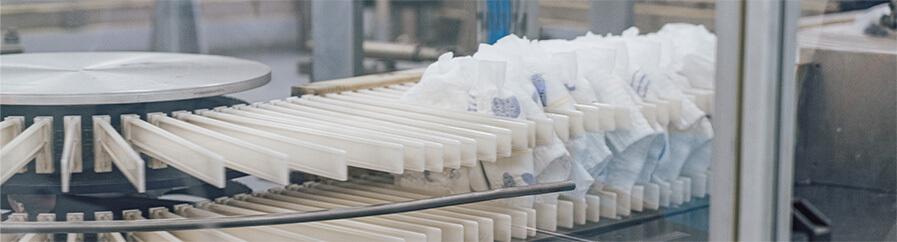
This is typically done using high-speed machines that can produce hundreds of diapers per minute.
As the diapers come off the production line, you’ll package them in bags or cases, ready for distribution to retailers and ultimately, to consumers.
Quality Control and Testing
Hundreds of diapers per minute may be rolling off the production line, but it’s crucial to ensure each one meets the highest quality standards.
You’re responsible for guaranteeing that every diaper that reaches the market is safe, reliable, and performs as expected.
To achieve this, you’ll implement a rigorous quality control process that involves multiple stages of testing and inspection.
First, you’ll conduct visual inspections to identify any defects or irregularities in the diaper’s appearance.
Next, you’ll perform functional tests to ensure the diaper’s absorbency, leakage protection, and comfort meet the required standards.
You may also conduct additional tests, such as tensile strength and durability tests, to ensure the diaper can withstand the rigors of daily use.
Throughout the quality control process, you’ll be checking for compliance with regulatory standards and industry norms.
You’ll also be monitoring the production line for any signs of contamination or other issues that could compromise the quality of the diapers.
Packaging and Distribution
Once quality control measures are in place, it’s time to prepare the diapers for shipping to retailers and eventually to end-users.
You’ll need to package the diapers in a way that protects them during transportation and storage. This typically involves wrapping individual diapers in plastic or paper, then bundling them into cases or pallets.
The packaging material should be durable, yet easy to open and dispose of.
You’ll also need to label each package with essential information, such as the product name, size, and quantity. This ensures that retailers can easily identify and stock the products on their shelves.
Additionally, you may want to consider including instructions for use, product features, and any relevant warnings or cautions.
Once packaged, the diapers are ready for distribution to retailers, wholesalers, or directly to consumers.
You can use various distribution channels, such as trucks, trains, or ships, depending on the distance and volume of the shipment.
Effective packaging and distribution are critical to getting your diapers to market quickly and efficiently, while maintaining their quality and integrity.
Conclusion
You’ve now seen the entire diaper manufacturing process unfold, from sourcing raw materials to delivering a quality product to market. It’s a complex journey that requires attention to detail, precision, and dedication. By understanding each stage, you can appreciate the effort that goes into creating a diaper that meets your needs. From prototype to packaging, every step is crucial in ensuring a reliable, comfortable, and effective product that makes a difference in people’s lives.

Leave a Reply