

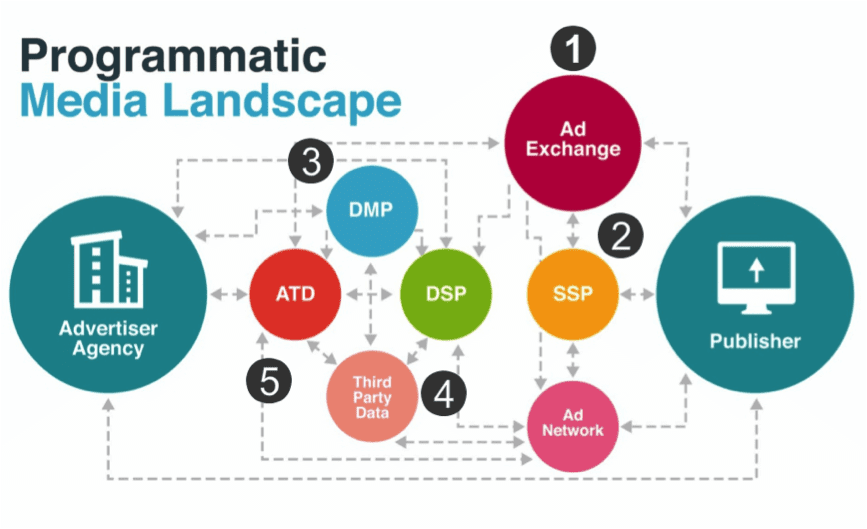
Programmatic digital advertising is set to undergo significant advancements by 2025 as technology continues to shape how ads are targeted, purchased, and delivered. With its potential to revolutionize marketing strategies, businesses are increasingly relying on this automated approach to reach audiences with precision and efficiency. But what does the future hold for programmatic in the coming years? Let's explore the trends, challenges, and opportunities that are likely to define its landscape in 2025.
The Role of AI and Machine Learning
By 2025, the integration of artificial intelligence (AI) and machine learning in programmatic digital advertising will reach new heights. These technologies are already enhancing the accuracy of ad targeting, and in the future, their predictive capabilities will become even more refined. AI-driven insights will allow advertisers to analyze vast datasets in real time, enabling hyper-personalized ad campaigns. This means marketers will be able to predict consumer behavior with greater accuracy, ensuring ads resonate deeply with the target audience.
Machine learning algorithms will also optimize ad placements, ensuring advertisers spend their budgets more efficiently. For instance, automated bidding systems will become more sophisticated, selecting the best ad spaces based on past performance, user behavior, and even external factors like time of day or regional trends.
Privacy Concerns and the Cookieless Future
The advertising industry has been grappling with increasing privacy concerns and stricter regulations, and these challenges will continue to shape programmatic digital advertising in 2025. With the phaseout of third-party cookies, advertisers are moving toward privacy-centric solutions. First-party data and contextual advertising strategies are expected to play a significant role.
Brands will need to foster direct relationships with their audiences to collect consented data. By leveraging tools such as Customer Data Platforms (CDPs), advertisers can gain valuable insights while respecting consumer privacy. Additionally, contextual targeting will make a comeback, allowing marketers to place ads based on the surrounding content instead of individual user behavior, striking a balance between personalization and compliance.
Growth of Connected TV (CTV) and Omnichannel Campaigns
Connected TV (CTV) is emerging as a dominant force in programmatic digital advertising, and its growth trajectory is expected to skyrocket by 2025. With more people cutting the cord and shifting to streaming platforms, advertisers are shifting their budgets toward CTV programmatic advertising. The ability to deliver highly targeted ads to viewers across devices will make CTV one of the most lucrative channels for marketers in the next few years.
Beyond CTV, the future of programmatic digital advertising also lies in creating seamless omnichannel experiences. Consumers interact with brands across multiple touchpoints, and in 2025, programmatic advertising will enable marketers to deliver consistent, tailored messages across devices and platforms. Whether it’s mobile, desktop, CTV, or even digital out-of-home (DOOH), programmatic advances will ensure cohesive strategies that integrate online and offline channels.
The Rise of Dynamic Creative Optimization
Dynamic Creative Optimization (DCO) is expected to play a pivotal role in the future of programmatic digital advertising. DCO involves using data to dynamically generate ad creatives tailored to individual users, ensuring highly personalized experiences. By 2025, advancements in creative automation will make it possible to deliver ads that feel less generic and more relevant.
For example, programmatic platforms will allow advertisers to automatically create different variations of ads based on user preferences, past interactions, and even location. This not only improves engagement but also strengthens brand-consumer relationships by delivering messages that resonate on a personal level.
The Importance of Sustainability in Advertising
Another key area shaping the future of programmatic digital advertising is sustainability. With growing awareness about environmental issues, both consumers and brands are becoming more conscious of their environmental impact. By 2025, advertisers will prioritize eco-friendly approaches, and programmatic technologies will help achieve this by reducing waste in ad spend and energy consumption.
For instance, through precise targeting and better analytics, campaigns can avoid unnecessary impressions and focus on audiences that are more likely to convert. Efficiency will not only benefit advertisers financially but also contribute to sustainability goals as the industry moves toward a greener future.
Challenges on the Horizon
While the future of programmatic digital advertising appears promising, challenges remain. Data security will continue to be a major concern, with brands needing to invest in robust cybersecurity measures to protect user information. Additionally, achieving transparency and combating ad fraud will remain top priorities. Brands will need to demand stronger verification processes and partner with trustworthy platforms to ensure ad spend delivers proper value.
Another potential challenge is keeping pace with rapid technological changes. The rise of new platforms, innovations, and audience preferences will require advertisers to adapt their strategies continuously. Companies that are slow to adopt these changes risk being left behind in this competitive landscape.
Opportunities for Businesses
Despite the challenges, programmatic digital advertising in 2025 will be full of opportunities for businesses willing to innovate. The adoption of emerging formats, better audience insights, and tools powered by AI will enable companies to stay ahead of the competition. Furthermore, with an increasing emphasis on inclusivity and creativity, brands that prioritize authentic storytelling and diverse representation in their campaigns will gain a competitive edge.
Businesses leveraging programmatic digital advertising to its full potential will unlock improved return on investment, growth in customer loyalty, and a stronger market presence. The focus will shift from short-term results to building long-term customer relationships – a goal that programmatic tools can effectively facilitate.
Final Thoughts
The future of programmatic digital advertising in 2025 is one defined by innovation, adaptability, and responsibility. From advanced AI capabilities and the evolution of CTV to adapting to privacy regulations and achieving sustainability, the possibilities are immense. Brands that keep pace with these changes and prioritize both consumer trust and technological adoption will thrive in the next wave of programmatic advancements. It’s a future that promises efficiency, precision, and boundless potential, fundamentally transforming the way businesses engage with their audiences.

Leave a Reply